
Churchyard Survey
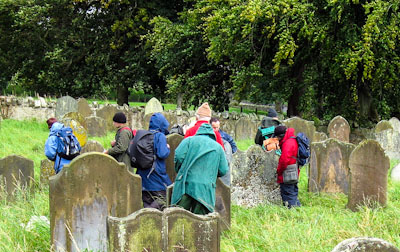 BLS members began to recognise the importance of churchyards as a lichen habitat in the 1970s. The variety of substrates and aspects can make for a rich diversity of lichen species, and this combined with the attractive locations and easy accessibility of churchyards has made them popular sites to survey for experts and novices alike.
The BLS Lowland Churchyard project was instigated in the early 1990s by the late Tom Chester. One of the initial aims of the project was to survey at least one churchyard in each of the Ordnance Survey’s 10km squares (hectads) covering lowland Britain, and this was achieved as a Millennium Project. The survey is still ongoing, recording more churchyards within the original area and also extending cover the south-west (now almost completed), Wales and the Welsh Borders, Northern England (almost complete), Scotland and Northern Ireland.
Churchyard recording can turn up some surprising finds, an unexpectedly rich churchyard, a rarity new to the area, or even the presence of a lichen once thought to be extinct (this has happened several times!). We now have some 430,000 records from 10,500 visits to 8,000 churchyards held in the BLS database. These records have given us a better knowledge of the distribution of the more common species, and they have enabled us to develop objective methods to assess the relative value of each churchyard for lichens. We now know which churchyards are most important for lichens, and have learnt much about the importance of conserving such places as long-term habitats
The environment of Britain is changing, in complex ways that vary from one area to another, so it is important that we continue this survey by recording new sites and by revisiting those that were last surveyed some ago. Further information on how to get involved and on churchyard lichen conservation can be found in the Churchyard pages on this website:
- Churchyard lichens
- Churchyard lichen conservation
- Diocesan contacts
- Interactive map of churchyards surveyed